Anyone can register, get an ARN, and start selling mutual fund schemes. Becoming a Mutual Fund Distributor that clients trust with their life goals is a different journey entirely. This guide breaks down what that journey actually looks like — the certifications, the skills, and the daily habits that separate a Mutual Fund Distributor from someone who simply processes transactions.
What Does It Actually Mean To Be A Mutual Fund Distributor
The term gets used loosely. Some people equate it with a certification passed years ago. Others equate it with the number of schemes they can recite from memory. Neither is a complete picture.
A genuine Mutual Fund Distributor is someone a client turns to before making a financial decision — not after. That trust isn't built through product knowledge alone. It's built through a combination of technical competence, regulatory discipline, and the ability to translate market noise into a calm, goal-linked conversation.
This matters for your practice because the market is getting more informed, not less. Clients now compare notes with friends, read financial content online, and ask sharper questions than they did five years ago. The bar for what counts as "distributor" has moved. If you're not actively building toward it, someone else — a direct plan app, a self-styled finfluencer, a more visible competitor — is filling that gap for your clients.
The Five Pillars Of Mutual Fund Distributor Expertise
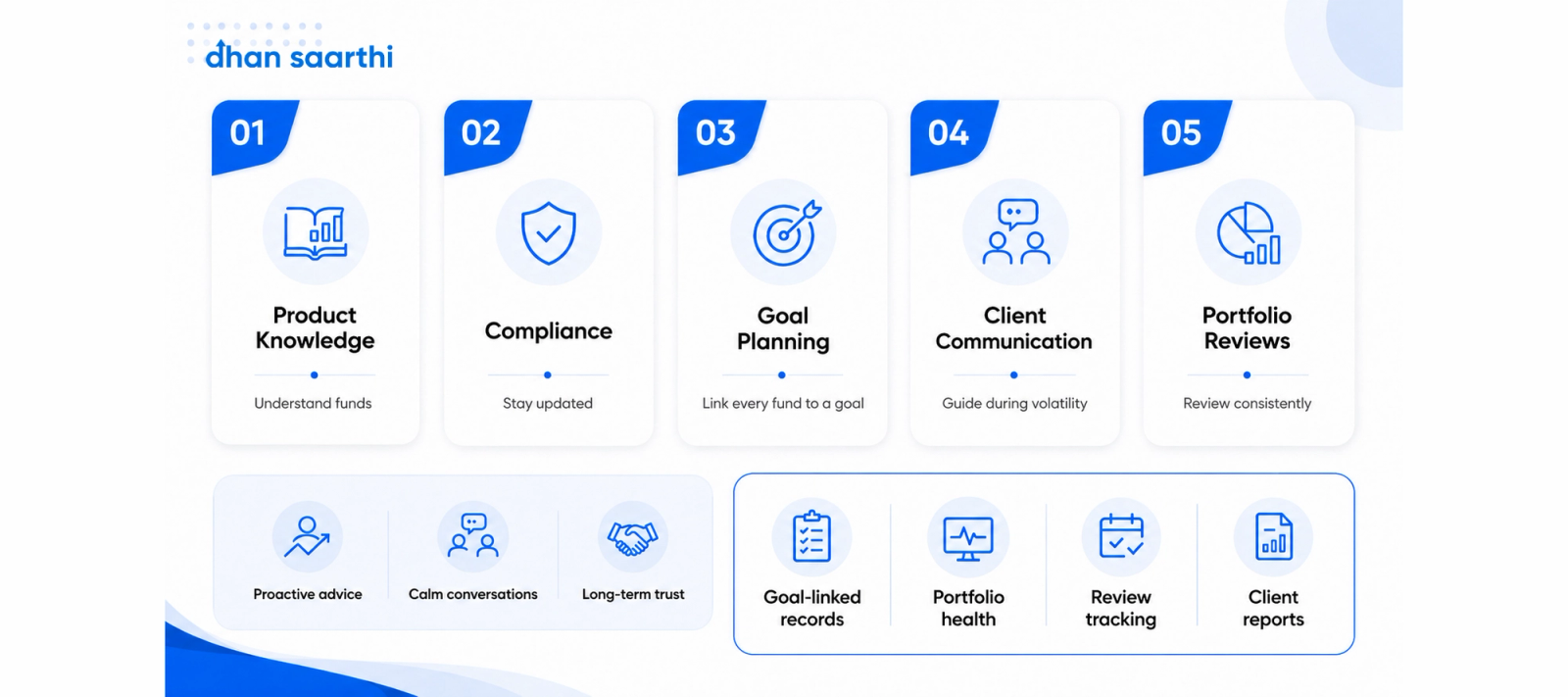
Expertise isn't one skill — it's a stack of them. Below are the five pillars that consistently show up in Mutual Fund Distributors who have built lasting client books, along with what to actually work on for each.
Pillar 01
Product And Market Knowledge That Goes Beyond The Factsheet
Knowing a scheme's category, expense ratio, and past returns is table stakes. What separates a Mutual Fund Distributor is understanding why a fund behaves the way it does — its portfolio construction philosophy, how it tends to perform across market cycles, and where it fits relative to similar funds a client may already hold.
Clients rarely ask you to explain a fund's alpha. But they can tell, almost instantly, whether you understand what you're recommending or whether you're reciting a factsheet.
How to build this
Set aside time each week to read one fund's portfolio commentary or fact sheet in depth, rather than skimming several. Build the habit of asking "what would make this fund underperform" before you recommend it — not just "what has its return been." Over time, this builds a working understanding you can explain in plain language, which is what clients actually value.
Pillar 02
Certification And Regulatory Fluency
A valid ARN and the mandatory certification are the entry ticket, not the finish line. What actually builds credibility is staying current — knowing when rules around disclosures, risk categorisation, or investor communication are updated, and adjusting your client conversations accordingly.
How to build this
Treat your certification renewal as a checkpoint to refresh your knowledge, not a formality to clear. Follow AMFI and SEBI circulars directly rather than relying on second-hand summaries. Set a recurring reminder well before your certification's expiry so lapses never disrupt your ability to transact for clients.
Pillar 03
Goal-Based Financial Planning Skill
A Mutual Fund Distributor doesn't sell a scheme — they solve for a goal. A child's education, a retirement corpus, a home down payment: each has a different time horizon, a different risk tolerance, and a different definition of "success." Recommending funds without anchoring them to a named goal is where most transactional selling falls short.
This is also what makes a client's portfolio defensible during a downturn — because the conversation was never only about returns in the first place.
How to build this
Make it a rule: no fund recommendation without a named goal attached to it. Build a simple template you use with every client — goal, timeline, risk comfort, current progress — and revisit it at every review. This single habit does more for perceived expertise than any certificate on your wall.
Pillar 04
Client Communication And Behavioural Coaching
Markets test client conviction far more often than they test fund selection. The clients who stay invested through a correction aren't the ones with the best-performing portfolio — they're the ones whose Mutual Fund Distributor prepared them for volatility before it happened.
This is a skill, not a personality trait. It can be practiced and improved like any other part of the job.
How to build this
Script your own "market fall" communication in advance, before you need it. Practice explaining volatility in plain language a first-time investor would understand. Every client conversation is an opportunity to reinforce a goal-based frame — use it deliberately instead of reactively.
Pillar 05
Portfolio Review And Ongoing Monitoring Discipline
A one-time recommendation isn't expertise — it's a transaction. What clients remember, and what they talk about to friends and family, is whether their portfolio was actively watched over time: rebalanced when needed, flagged for overlap, adjusted as their goals evolved.
This is also the pillar that scales the least naturally as your client book grows — which is exactly where most Mutual Fund Distributors start to fall behind without the right systems.
How to build this
Set a fixed review cadence for every client — not just your largest ones — and track whether you're actually keeping to it. Build a simple checklist for what a review should cover: goal progress, asset allocation drift, fund overlap, and any life changes. Consistency here compounds into reputation faster than almost anything else on this list.
Mutual Fund Distributor Skill-Building Framework
Knowing the five pillars is one thing. Turning them into a working plan is another. Use the framework below to identify where your current gaps are and what to prioritise first.
| Skill Area | How To Develop It | Time Investment | Priority |
|---|---|---|---|
| Product knowledge | Weekly deep reads of fund commentary and portfolio construction notes | Ongoing, 2–3 hours/week | Medium |
| Certification and compliance fluency | Track AMFI/SEBI circulars, renew certification well before expiry | Ongoing, low weekly effort | High |
| Goal-based planning | Use a standard goal template for every client conversation | One-time setup, then habitual | High |
| Client communication | Prepare volatility scripts and goal-anchored talking points in advance | A few hours per quarter | Medium |
| Portfolio review discipline | Fixed review cadence and checklist applied to every client, not just top clients | Ongoing, structured | High |
💡 Expertise is rarely announced — it's noticed. Clients form their opinion of your expertise through small, repeated signals: whether you called before they had to ask, whether your last review referenced their actual goal, whether your explanation during a market fall made sense. None of these require a new certificate. They require consistency.
Three habits that separate a Mutual Fund Distributor from a scheme seller
- ✓ Never recommend a fund without stating the specific goal it's meant to serve — write it down, don't just say it.
- ✓ Review every client's portfolio on a fixed schedule, not only when they call with a question.
- ✓ Reach out proactively within days of a significant market move — before clients have to ask you what's happening.
How Dhan Saarthi Helps You Become A Mutual Fund Distributor
Every pillar above is easier to talk about than to practice consistently — especially once your client book grows beyond a handful of names. Manually tracking goals, review dates, and portfolio drift for every client is where good intentions quietly break down.
Dhan Saarthi is built to help you operationalise the habits that build real expertise, not replace the judgment that makes you a Mutual Fund Distributor in the first place. Here's what that looks like in practice:
- ✓ Goal-linked client records. Keep every client's goal, timeline, and risk profile attached to their portfolio, so every recommendation stays anchored to something specific.
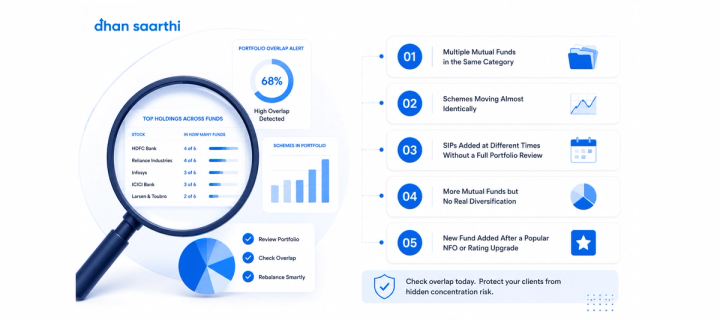
- ✓ Portfolio health analysis. Spot asset allocation drift, fund overlap, and review gaps across your book without checking each client one by one.
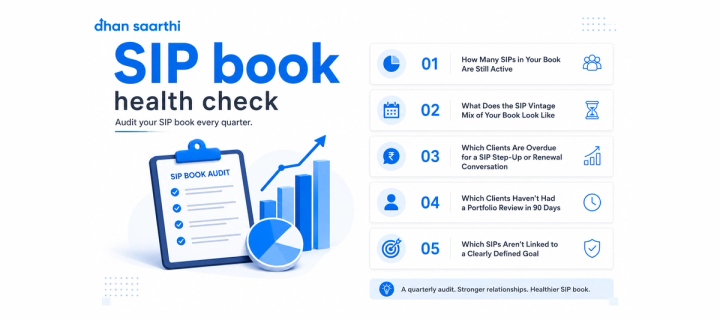
- ✓ Review cadence tracking. See exactly which clients are due for a review, so no one goes unreviewed simply because they didn't ask.
- ✓ Client reporting tools. Turn a portfolio review into a clear, presentable update — the kind of consistent communication that builds a client's confidence in your expertise over time.
The goal is simple: give you back the time and visibility to focus on the judgment calls only a Mutual Fund Distributor can make, while the system handles the tracking.
Build The Systems Behind Real Mutual Fund Distributor Expertise
See how Dhan Saarthi helps you track goals, reviews, and portfolio health across your entire client book — request a demo today.
Request a Dhan Saarthi DemoConclusion
Becoming a Mutual Fund Distributor isn't a single milestone you cross once — it's a practice you maintain. Certification opens the door. Product knowledge, regulatory fluency, goal-based planning, communication, and review discipline are what keep clients walking back through it, year after year.
None of these five pillars require a dramatic reinvention. They require consistency — the kind that's far easier to sustain when you have the right systems supporting you behind the scenes.