Most Mutual Fund Distributors (MFDs) don't lose clients because of bad fund selection. They lose them because reviews happen irregularly, or only when a client calls in worried. A monthly portfolio review system fixes this — replacing memory-dependent check-ins with a repeatable process that catches problems early.
Most MFDs don't lose clients because of bad fund selection. They lose them because reviews happen irregularly, or only when a client calls in worried. By the time that call comes, the relationship is already under strain — and the client is often already comparing you to a direct plan or another advisor.
A monthly portfolio review system fixes this. It's not about reviewing every client's entire portfolio line by line every 30 days. It's about having a repeatable process that catches problems early, keeps communication proactive, and removes your dependence on memory or client-initiated contact.
This article lays out a practical monthly review system you can actually run — even if you're managing the process solo, without a large back-office team.
Why a Monthly Review Cadence Matters for MFDs
Annual or "as needed" reviews tend to fail quietly. A client's SIP may auto-debit for months while their allocation drifts, their goals change, or their engagement drops — and none of it surfaces until a redemption request or a direct-plan switch.
A monthly cadence doesn't mean a monthly meeting with every client. It means a monthly internal check across your book, so you know exactly which clients need attention this month, and which ones simply need a light-touch update. This is what separates a reactive practice from one that manages client relationships on its own terms.
What a Monthly Portfolio Review Should Actually Cover
A useful monthly review isn't a full re-analysis of every holding. It's a focused pass across a few signals that tend to predict client dissatisfaction or portfolio drift if left unchecked.
Portfolio health markers to check every month
At a minimum, this includes recent performance relative to the client's benchmark expectation, any funds that have underperformed for a sustained period, and any funds flagged internally for review (say, due to a manager change or a category-level concern). The goal is not to react to every monthly fluctuation — it's to flag patterns worth a conversation.
SIP status and step-up opportunities
Check for missed SIP instalments, SIPs approaching maturity, and clients whose income or life stage suggests they may be ready for a step-up. A missed SIP caught in month one is a quick conversation. The same missed SIP caught in month four is often already a lost client.
Asset allocation drift
Market movement alone can shift a client's equity-debt mix away from their original risk profile over a few months. Flagging accounts where allocation has drifted meaningfully gives you a reason to reach out with a specific, useful update rather than a generic check-in.
Building the Review Workflow — Step by Step
Step 1: Segment clients by review priority
Not every client needs the same depth of monthly attention. Group your book into tiers — for example, clients with active SIPs and higher engagement, clients with lump-sum or HNI portfolios, and clients who are largely passive. This lets you spend more time where the business risk and opportunity are highest, instead of spreading effort evenly across a book where not every client needs it.
Step 2: Pull data before the review, not during
Reviewing portfolios while simultaneously trying to compile the data is where most manual processes break down. Set aside a fixed window each month — the first week is common — to pull portfolio snapshots, SIP status, and any flagged funds across your book before you start reviewing individual clients.
Step 3: Standardize the review checklist
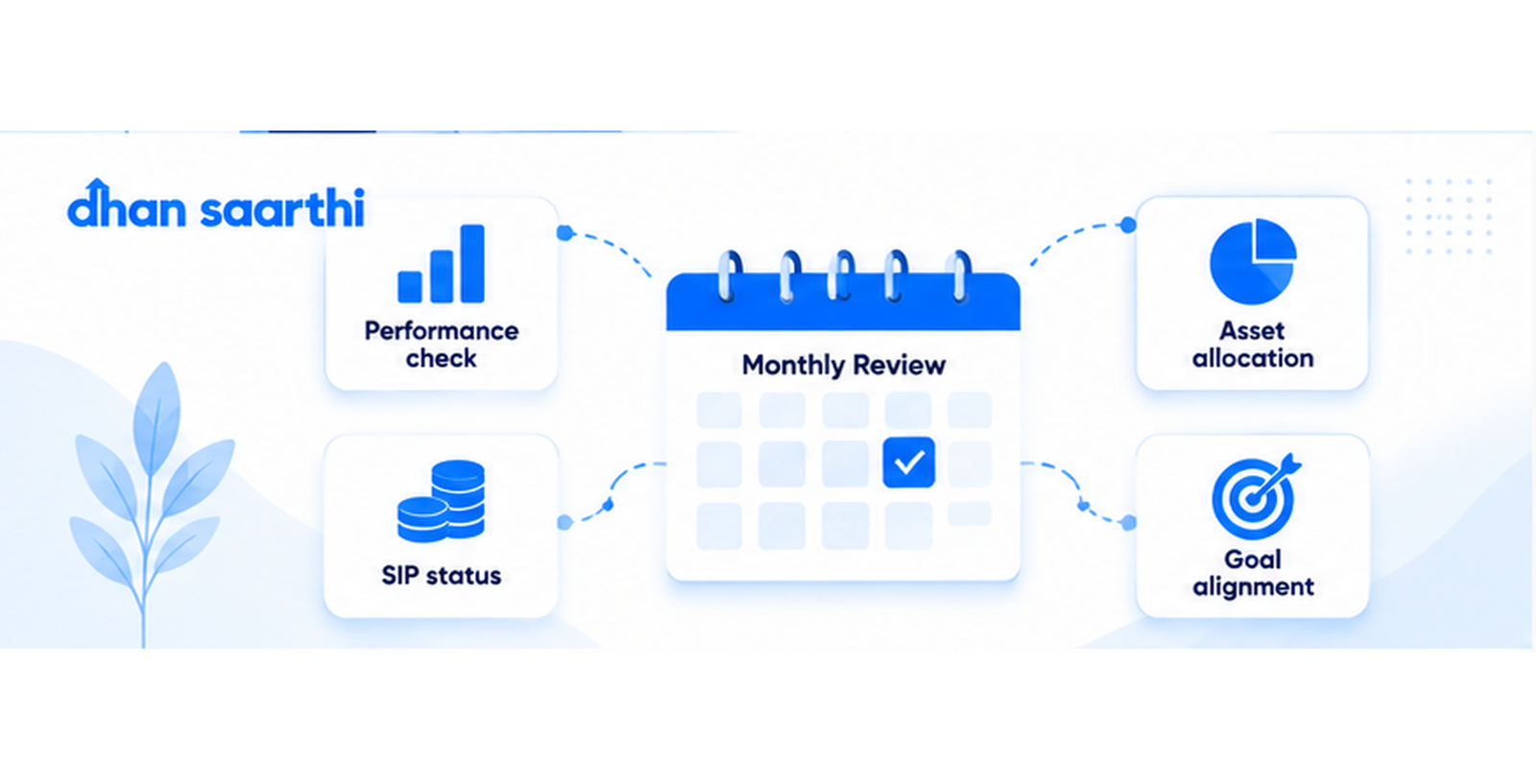
Use the same checklist for every client review: performance check, SIP status, allocation drift, goal alignment, and any pending client instructions. Standardizing this prevents reviews from becoming inconsistent depending on which clients happen to be top of mind that week.
Step 4: Document outcomes and follow-ups
Every review should end with a recorded outcome — no action needed, client contact required, or portfolio change recommended — and who owns the follow-up. Without this, reviews happen but nothing changes, which defeats the purpose of doing them in the first place.
- Segment clients by review priority
- Pull data before the review, not during
- Standardize the review checklist
- Document outcomes and follow-ups
Common Mistakes MFDs Make With Client Reviews
The most common mistake is treating reviews as a compliance formality rather than a retention tool — running through the motions without using the output to actually contact clients. A close second is reviewing portfolios without a consistent checklist, which means real issues get missed depending on how much time is available that day. The third is doing reviews but never documenting them, so the same gaps resurface month after month with no record of what was already flagged.
- ✓ Treating reviews as a compliance formality instead of a retention tool
- ✓ Reviewing portfolios without a consistent checklist
- ✓ Doing reviews but never documenting outcomes
How Dhan Saarthi Supports Your Monthly Review Process
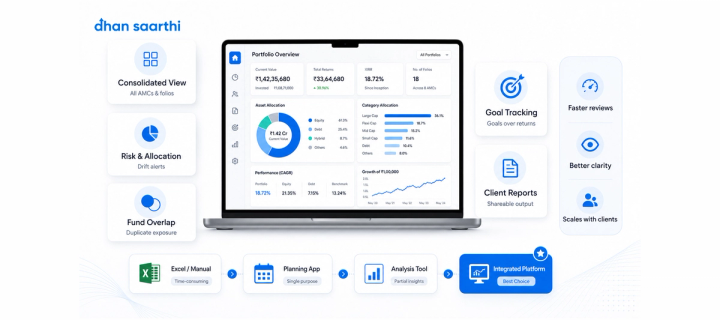
Dhan Saarthi's portfolio health analysis tools are built to remove the manual data-pulling step from this workflow. Instead of compiling SIP status, allocation drift, and fund-level flags client by client, you can view portfolio health signals across your book in one place, prioritize which clients need attention this month, and keep a record of past reviews and follow-ups tied to each client.
This doesn't replace your judgment on what to tell a client or how to position a recommendation — it removes the operational friction so you can spend the time you save actually talking to clients, not preparing to.
See How Dhan Saarthi Handles Client Portfolio Review
Request a demo and evaluate Dhan Saarthi — with your own practice in mind.
Request a Demo on Dhan SaarthiConclusion
A monthly portfolio review system isn't about adding more work to your calendar — it's about replacing scattered, memory-dependent reviews with a process you can run consistently, even as your client book grows. Clients rarely leave because of one bad month in the market. They leave because no one reached out before they started asking questions. A structured monthly cadence makes sure you're always the one reaching out first.